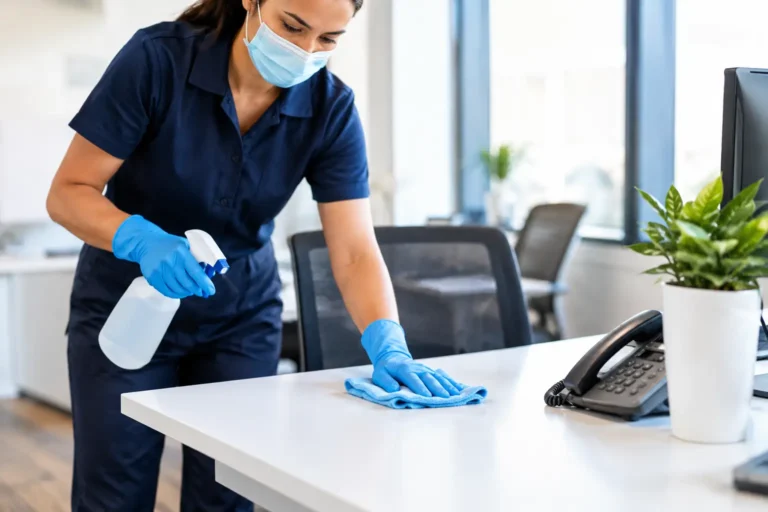
The conference room table has fingerprints on it by 10 a.m. The break room microwave handle gets touched all day. Door handles, restroom fixtures, copier buttons, and shared desks can pass through dozens of hands before the workday ends. So, do office cleaners disinfect shared surfaces? Often, yes, but the answer depends on the cleaning plan, the products used, and the level of service your business requests.
A standard office cleaning visit usually includes cleaning the visible dirt, dust, crumbs, and smudges that make a workplace look neglected. Disinfection is a more specific step. It uses an approved disinfectant correctly to reduce germs on hard, nonporous surfaces. For Reno and Sparks businesses, knowing the difference helps you choose a service that supports both a professional appearance and a healthier workplace.
Cleaning and disinfecting are not the same service
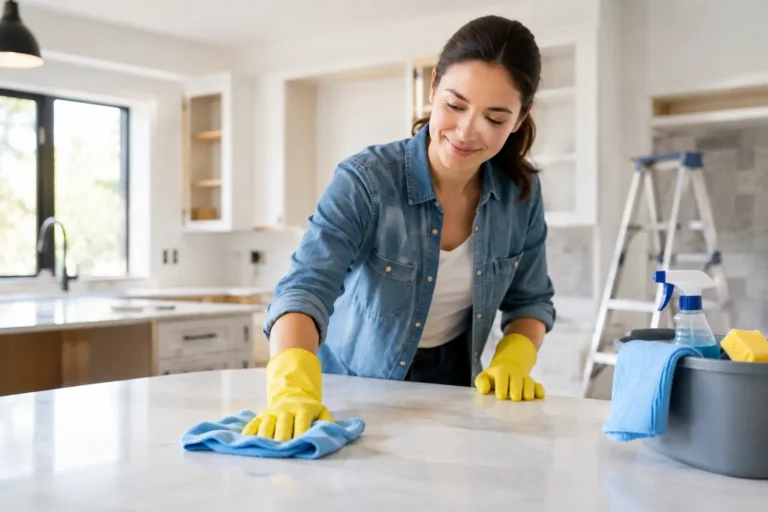
Cleaning removes soil and debris from a surface. It may involve wiping, vacuuming, dusting, mopping, or using a general-purpose cleaner. This work matters because a tidy office is more comfortable for employees, more welcoming to visitors, and easier to maintain over time.
Disinfecting goes further. A disinfectant is designed to kill or inactivate certain germs when it is used according to its label directions. The surface usually needs to be cleaned first if it has visible dirt. Then the disinfectant must stay wet for the required contact time. Spraying a surface and immediately wiping it dry may not provide the result the product is designed to deliver.
That distinction is why businesses should not assume every routine wipe-down is disinfection. A dependable cleaning provider can explain exactly what is included, which areas receive disinfectant treatment, and how frequently those services are performed.
Which shared surfaces should office cleaners disinfect?
High-touch areas are the priority because they are handled repeatedly by employees, customers, delivery drivers, and guests. In most offices, these areas include entry door handles, light switches, elevator buttons, restroom faucets and flush handles, break room appliance handles, shared keyboards, phones, copier controls, and conference room tables.
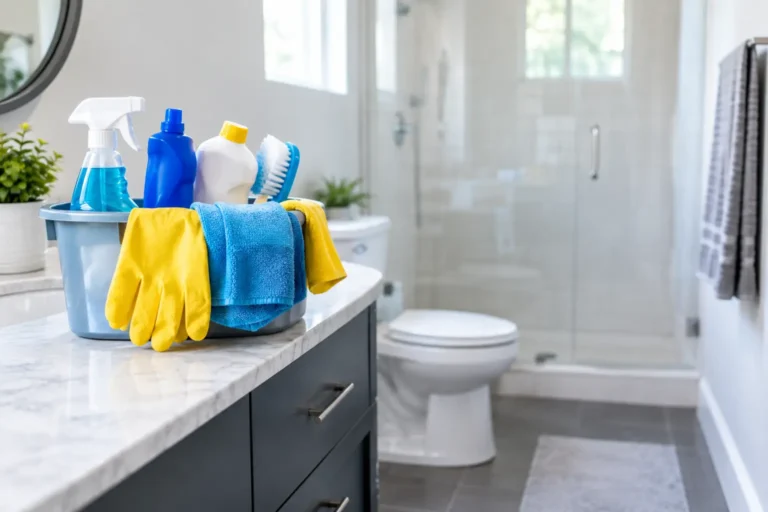
Restrooms and break rooms generally deserve the most attention. They combine frequent use with moisture, food preparation, and close-contact surfaces. A thorough office cleaning plan should also address trash removal, sink cleaning, toilet and urinal cleaning, floor care, and replenishing supplies if that service is part of the agreement.
Shared equipment requires some judgment. A copier touch screen or keyboard may need a product that is safe for electronics, rather than a standard liquid disinfectant. Wood, stone, painted surfaces, and specialty finishes can also be damaged by the wrong chemical. Professional cleaners should match the method to the material instead of treating every surface the same way.
What determines whether disinfection is included?
Office cleaning is not one-size-fits-all. A small professional office with five employees has different needs than a busy medical-adjacent office, call center, retail space, or property management company with constant visitor traffic. The right plan depends on the number of people in the building, the type of work performed, shared-space use, and how often the office is cleaned.
Some businesses request routine disinfection of high-touch surfaces at every visit. Others choose standard cleaning several times a week with more detailed disinfection scheduled weekly or after a period of increased illness in the office. If your team shares desks, headsets, meeting rooms, or break room appliances heavily, more frequent attention is usually worthwhile.
It also depends on what is written into the scope of work. “Office cleaning” may cover vacuuming, emptying trash, cleaning restrooms, and dusting surfaces, while “sanitizing” or “disinfection of high-touch points” may be a separate line item. There is nothing wrong with either arrangement, as long as expectations are clear before service begins.
Ask direct questions before hiring an office cleaner
A clear conversation upfront prevents frustrating assumptions later. When comparing office cleaning services, ask whether disinfecting shared surfaces is included in the regular visit or available as an added service. Ask which high-touch points are covered, how often they are treated, and whether the team follows product contact-time instructions.
You should also ask what happens when your office needs extra attention. A stomach bug, flu season, a large client event, construction dust, or an unusually busy week can change your needs quickly. A flexible local cleaning company should be able to adjust the plan without making your office manager chase down answers.
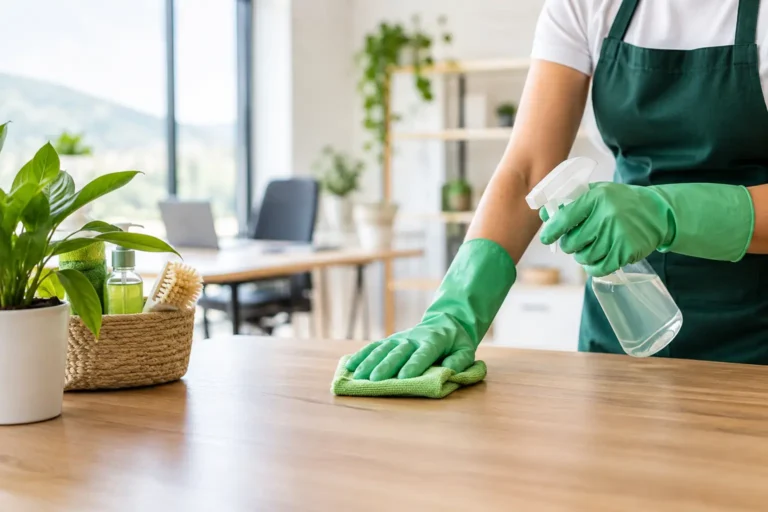
If eco-friendly cleaning is a priority, bring that up as well. Eco-conscious products can be a strong choice for daily cleaning and can reduce harsh odors in enclosed workspaces. However, not every green cleaner is a registered disinfectant, and not every disinfectant is right for every material. The best approach balances practical surface care, employee preferences, and the actual sanitation needs of the space.
Frequency matters more than occasional deep cleaning
A deep clean can refresh an office, but it does not replace a consistent maintenance schedule. Shared surfaces become dirty again as soon as people return to work. For many offices, recurring cleaning is the most reliable way to keep restrooms, break rooms, entry areas, and workspaces under control.
A typical schedule might involve regular cleaning after business hours and targeted disinfection of high-touch surfaces at each visit. Offices with high foot traffic may need service more often, especially in common areas. Smaller offices with limited visitors may be well served by fewer visits paired with employees taking responsibility for wiping down personal workstations between professional cleanings.
There is a practical trade-off here. More frequent service costs more, but it can reduce the burden on staff, maintain a better first impression, and prevent grime from building into a larger and more expensive project. A good provider will recommend a schedule based on your space rather than trying to sell the same package to every business.
Your employees still play a role
Professional cleaners can maintain the workplace, but daily habits make the service more effective. Employees should avoid leaving food spills overnight, empty their personal desk trash as directed, and report restroom or break room issues promptly. Shared desks and equipment should have a simple process for cleaning between users, especially when multiple shifts use the same area.
That does not mean asking employees to take on janitorial work. It means creating reasonable boundaries. Your cleaning team handles the dirty work and the detailed recurring care, while your staff helps keep shared spaces usable from one cleaning visit to the next.
Why reliable office disinfection protects your business image
People notice the small things. A smudged glass entry door, sticky break room counter, or neglected restroom can make clients question how carefully a business handles everything else. Employees notice, too. When a workplace is consistently clean, it signals respect for the people who spend their week there.
Reliable service is especially valuable for office managers and business owners who already have enough to coordinate. You need cleaners who show up as scheduled, understand your priorities, protect your space, and communicate clearly if something needs attention. Bonded and insured professionals provide additional peace of mind when they are working around offices, equipment, and confidential work areas.
Cleaning Bee helps Northern Nevada businesses build office cleaning plans around their real needs, from recurring maintenance to detailed cleaning and high-touch surface disinfection. The goal is straightforward: a spotless clean every time, without adding another problem to your workday.
A clean office should never be a guessing game. Set the standard for shared surfaces, make sure it is included in your service plan, and give your team a workspace that feels cared for every time they walk through the door.