A clean-looking desk is not always a sanitized one. Keyboards, break room counters, door handles, and shared equipment can collect germs throughout a normal workday, even in a well-run office. Knowing how to sanitize office surfaces helps protect your team, support a healthier workplace, and keep the professional environment clients expect when they walk through your door.
For Reno and Sparks businesses, a consistent routine matters more than occasional deep cleaning. The right process removes visible dirt first, uses the correct sanitizing product, and gives that product enough time to work. Done properly, office sanitation is practical, effective, and easy to build into your regular cleaning plan.
Start by Cleaning, Then Sanitize Office Surfaces
Cleaning and sanitizing are related, but they are not the same job. Cleaning removes dust, crumbs, fingerprints, and soil from a surface. Sanitizing reduces germs on a surface to safer levels. If you spray sanitizer directly over a dusty or visibly dirty surface, it may not work as intended.
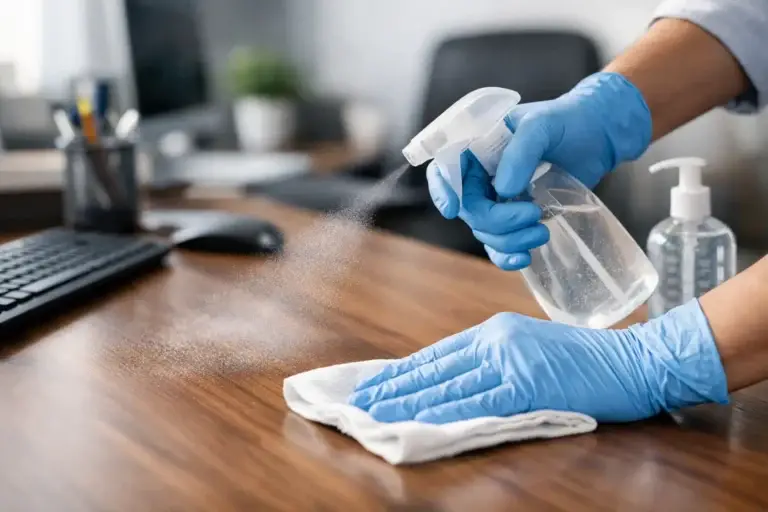
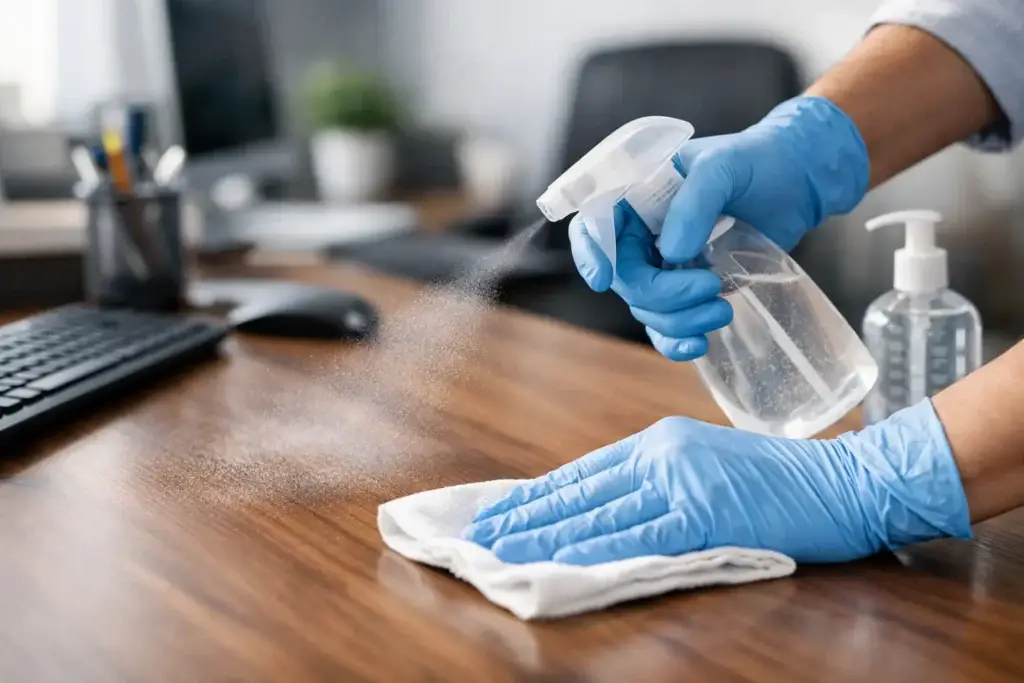
Start with a clean microfiber cloth and an appropriate all-purpose cleaner. Wipe away visible residue, especially around food areas, shared desks, and frequently handled equipment. Then apply a sanitizer that is labeled for the type of surface you are treating.
Always follow the product label. The label explains how much product to use, whether the surface must remain wet, and how long it needs to sit before wiping or air drying. This contact time is one of the most commonly missed parts of office sanitation. A quick spray and immediate wipe may leave the surface looking clean without giving the product time to reduce germs effectively.
Focus on the Surfaces People Touch Most
You do not need to treat every wall and cabinet door several times a day. A smart sanitation routine focuses first on high-touch points, particularly in shared spaces and areas with steady employee or visitor traffic.
The most common office touchpoints include:
- Door handles, push bars, locks, and light switches
- Reception counters, pens, clipboards, payment terminals, and waiting-room tables
- Shared desks, keyboards, mice, phones, printers, copiers, and conference room controls
- Break room tables, refrigerator handles, microwave buttons, coffee stations, and sink faucets
- Restroom handles, stall locks, faucets, flush levers, dispensers, and countertops
How often these areas need attention depends on your office. A small office with a handful of employees may need a thorough daily sanitation routine and touch-up cleaning during the week. A busy medical-adjacent office, retail business, customer-facing workspace, or large shared office may need high-touch areas sanitized several times each day.
Pay attention to patterns in your workplace. If everyone uses the same conference room before lunch, sanitize the table, chair arms, door handles, and remote controls afterward. If the break room sees constant traffic, schedule quick wipe-downs between a more complete daily cleaning.
Choose Products That Are Safe for the Surface
Not every sanitizing product belongs on every office surface. Strong chemicals can discolor desks, dull finished wood, damage touchscreens, or leave residue on electronics. Eco-friendly products can be a good option for many workplaces, but they still need to be used according to their labels and must be appropriate for the sanitation goal you have in mind.
For hard, nonporous surfaces such as laminate counters, sealed desks, metal handles, and tile, use a product labeled for sanitizing those materials. For electronics, avoid spraying liquid directly onto the device. Instead, lightly apply the product to a microfiber cloth, following the device manufacturer’s care instructions, and wipe carefully. Never saturate keyboards, ports, screens, or phones.
Food-contact surfaces in break rooms require extra care. Sanitize counters and tables with a product approved for that use, then rinse if the product label requires it. A clean coffee station should not come with a chemical taste in the next pot of coffee.
Avoid mixing cleaning products. Combining bleach with ammonia, acids, or other cleaners can create harmful fumes. Keep products in their original labeled containers, store them securely, and make sure staff members know which supplies are intended for which tasks.
Use the Right Tools and Prevent Cross-Contamination
A sanitation routine can fail if the same dirty cloth is used from one area to the next. Microfiber cloths are an effective choice because they pick up fine particles and can be assigned by area or task. Use a simple color-coding system if your office has several rooms: one color for restrooms, another for break rooms, and another for desks and common areas.
Change cloths when they become soiled and use fresh mop heads or pads in restrooms and food areas. Disposable wipes can be useful for quick touch-ups, but they are not always the most efficient or environmentally responsible choice for an entire office. For routine service, washable microfiber supplies paired with properly selected products can reduce waste while maintaining a spotless clean every time.
Wear gloves when handling cleaning chemicals or working in restrooms. Wash hands after removing gloves, since gloves can pick up contamination just like bare hands. Good ventilation also helps when using any product with a noticeable odor or chemical content.
Create an Office Sanitation Schedule Your Team Can Follow
The best sanitation plan is one that actually happens. Instead of asking employees to clean everything whenever they have time, assign clear tasks and timing. Keep the routine realistic for your office size, traffic level, and available staff.
Daily tasks often include sanitizing high-touch entry points, break room surfaces, restroom fixtures, shared equipment, and reception areas. Weekly work can cover less-frequently touched surfaces such as cabinet pulls, chair arms, interior glass, baseboards near workstations, and storage-room handles. A periodic deeper cleaning can address areas that routine maintenance misses, including detailed floor care, vents, upholstery, and hard-to-reach corners.
If an employee is sick or there has been a known exposure concern, increase attention to the surfaces that person used and follow your workplace policies. There is no need to panic-clean every inch of the building, but prompt, careful sanitation of shared touchpoints is a sensible response.
A simple checklist near the supply closet can keep standards consistent. Include the product name, the surfaces it can be used on, required contact time, and instructions for restocking supplies. That clarity reduces guesswork and helps protect both employees and the materials in your office.
When Professional Office Cleaning Makes Sense
Employees can manage small daily tasks, but expecting them to maintain a full sanitation program on top of their regular work is not always practical. It can also lead to inconsistent results, skipped areas, or improper product use. Professional office cleaning provides a dependable routine without shifting the burden onto your team.
Cleaning Bee helps businesses across Reno, Sparks, and Northern Nevada maintain clean, trustworthy, and secure workspaces. Our experienced team can handle recurring office cleaning, detailed sanitation of high-touch areas, restrooms, break rooms, and the routine upkeep that helps your workplace stay ready for employees and visitors.
A professional service is especially helpful when your office has high traffic, multiple shifts, customer-facing spaces, or a need for reliable after-hours cleaning. It is also a practical choice after construction, renovation work, a move, or a busy season that left routine cleaning behind.
Your office does not need to smell heavily perfumed or feel like a chemical lab to be properly cared for. A thoughtful sanitation routine, the right products, and consistent attention to the places people use every day can make your workplace feel cleaner, safer, and more welcoming from the first person in each morning to the last one out.