A clean home with pets does not require constant scrubbing. It requires a routine that keeps fur, tracked-in dust, litter, and odors from building up faster than you can manage them. The best cleaning schedule for pets is one you can follow on your busiest weeks, not an unrealistic plan that falls apart after two days.
For homes in Reno, Sparks, and Northern Nevada, that routine also needs to account for dry weather, windblown dust, muddy paws after a storm, and seasonal shedding. A few small daily habits paired with focused weekly cleaning can make your space feel comfortable for your family, your pets, and anyone stopping by.
Start With Your Pet’s Real Habits
A cleaning schedule should match the animal and the home. A short-haired indoor cat creates a different workload than two large dogs that enjoy the backyard, and a puppy in training needs more attention than a senior dog with predictable routines.
Before setting your schedule, notice where the mess collects. Look at entryways, sofa cushions, under beds, around food bowls, litter boxes, kennels, and the paths your pets take most often. Those are the areas that deserve regular attention. Cleaning every room equally is rarely the most efficient approach.
It also helps to consider allergies. If someone in your household is sensitive to pet dander, vacuuming and dusting may need to happen more often. If your pet sheds heavily in spring or fall, plan for extra brushing and vacuuming during those weeks rather than waiting until fur has collected in every corner.
The Best Cleaning Schedule for Pets, Day by Day
Daily: Handle Fur, Food, and Fresh Messes
Daily pet cleaning should take about 10 to 20 minutes. The goal is not a full-house clean. It is preventing small messes from turning into stains, odors, or a Saturday-long project.
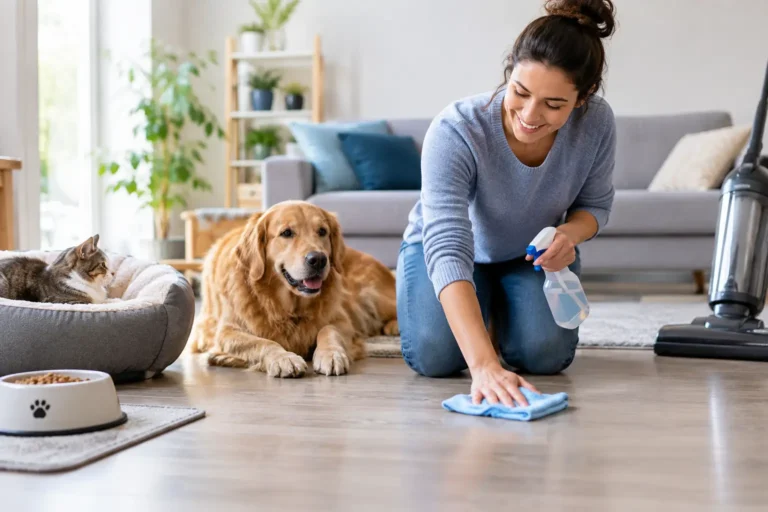
Wipe up accidents immediately with a pet-safe cleaner, especially on carpet, rugs, upholstery, and grout. The longer moisture sits, the harder it is to remove the stain and odor completely. For repeat accident areas, use an enzyme cleaner designed to break down organic residue rather than simply covering the smell.
Pick up visible fur from furniture and quickly sweep or vacuum the most-used floors. A cordless vacuum or a dedicated pet-hair tool near the living room can make this task much easier. Empty water bowls, rinse food bowls, and refill them with fresh water. If your dog spends time outdoors, wipe paws at the door before dirt reaches the hallway or sofa.
For cat households, scoop litter boxes daily. This is one of the most effective ways to control odor and keep cats from looking for a cleaner place to go. A small mat outside the box also catches litter before it spreads across the floor.
Every Two to Three Days: Reset High-Traffic Areas
Pet hair and dander settle quickly, particularly on fabric, baseboards, and hard floors. Every few days, vacuum the living room, bedrooms where pets sleep, and the entryway. Use attachments along couch seams, pet beds, stairs, and under furniture where fur tends to gather.
Wipe down feeding stations and clean the floor underneath them. Food crumbs and water splashes can attract pests and leave sticky residue, even when the bowls look clean. Launder or shake out small mats near doors, crates, and bowls as needed.
If your pet uses washable blankets on furniture, rotate them regularly. A blanket is much easier to wash than a full couch cover, and it can protect upholstery from dirt, hair, and the occasional wet-dog smell.
Weekly: Clean the Surfaces Pets Touch Most
A weekly cleaning session is where the home starts to feel truly refreshed. Vacuum all floors, including rugs and carpet edges, then mop hard surfaces with a product that is safe for pets when used as directed. Avoid letting animals walk across wet floors until they are dry.
Wash pet bedding, blankets, crate pads, and washable toys. Bedding holds onto oils, saliva, dander, and outdoor debris, so it can become an odor source even when the rest of the room is clean. Check care labels and use a fragrance-free or mild detergent if your pet has sensitive skin.
Dust furniture, window sills, shelves, and baseboards. Pet hair often clings to dust, making these surfaces look dirty sooner. Pay attention to vents as well. Clean air vents can help reduce the circulation of hair and dander through your home.
Clean the litter box more thoroughly once a week by emptying it, washing it with mild soap and warm water, drying it fully, and adding fresh litter. For dog owners, this is also a good time to wash outdoor bowls, clean kennel surfaces, and inspect the yard for waste.
Monthly: Reach the Places That Get Missed
Monthly pet cleaning protects the condition of your home over time. Move lightweight furniture to vacuum underneath it, wash throw pillows and removable covers, and clean the walls or doors at pet height. Nose prints, drool, paw marks, and rubbing can leave a surprising amount of buildup around doors and windows.
Vacuum upholstered furniture more deeply and clean under sofa cushions. If your pet rides in the car often, vacuum the vehicle and wash any travel blankets or seat protectors. Grooming tools should also be cleaned monthly so they continue to work well and do not spread loose fur around the home.
This is a good time to inspect carpets and rugs for lingering odors or stains. If regular spot treatment has not solved the problem, professional carpet cleaning may be the better choice. Repeatedly soaking an area with too much product can make odors harder to remove and may damage the backing of some rugs.
Build Pet Grooming Into the Cleaning Routine
The cleanest home starts with a well-groomed pet. Brushing your dog or cat several times a week, or daily during shedding season, removes loose hair before it lands on floors and furniture. It is often faster to spend five minutes brushing outside than to spend 30 minutes vacuuming indoors.
Bathing needs vary by breed, coat type, lifestyle, and veterinary guidance. Overbathing can dry out skin, so do not use frequent baths as the only answer to household odor. Instead, keep bedding clean, groom consistently, and address skin, dental, or ear concerns with a veterinarian if your pet has a persistent smell.
Nail trims also matter. Trimmed nails are less likely to scratch floors, snag rugs, or damage upholstery. A clean pet is not just better for the house. It is more comfortable for the animal, too.
Use Products That Are Safe Around Animals
A product can smell fresh and still be a poor fit for a pet household. Store cleaning supplies securely, follow label directions, and keep pets away from treated surfaces until they are dry. Be especially careful with concentrated disinfectants, essential oils, bleach products, and strongly scented sprays.
For everyday cleaning, choose pet-conscious products and use the amount recommended on the label. More cleaner does not always mean a cleaner surface. It can leave behind residue that collects dirt or irritates paws and skin.
If you are unsure about a product, start with the areas your pet does not access and ask your veterinarian about specific safety concerns. Homes with birds, reptiles, or small mammals may need extra caution because these animals can be more sensitive to fumes and aerosols.
Know When Professional Help Makes Sense
A regular routine keeps everyday mess under control, but some situations call for extra support. Deep cleaning can be helpful after a long shedding season, before a move, after a renovation, or when odors and grime have built up in overlooked areas. It is also practical for busy households that want the benefits of a consistently clean home without giving up their weekends.
Professional cleaners can focus on the detailed work that is easy to postpone: baseboards, floors, bathrooms, kitchens, dust buildup, and the surfaces that make a home feel less fresh over time. For pet households, clear communication matters. Let the cleaning team know about your animals, their routines, and any areas that need special attention.
Cleaning Bee provides dependable residential cleaning for busy Northern Nevada households that want a spotless clean every time. Whether you need recurring help or a deeper reset, a professional schedule can take the pressure off while helping your home stay comfortable for every member of the family – paws included.
A pet-friendly home does not need to look like a pet-free home. It should feel lived in, cared for, and easy to enjoy. Set a routine you can maintain, handle messes promptly, and get help when the dirty work starts taking more time than it should.