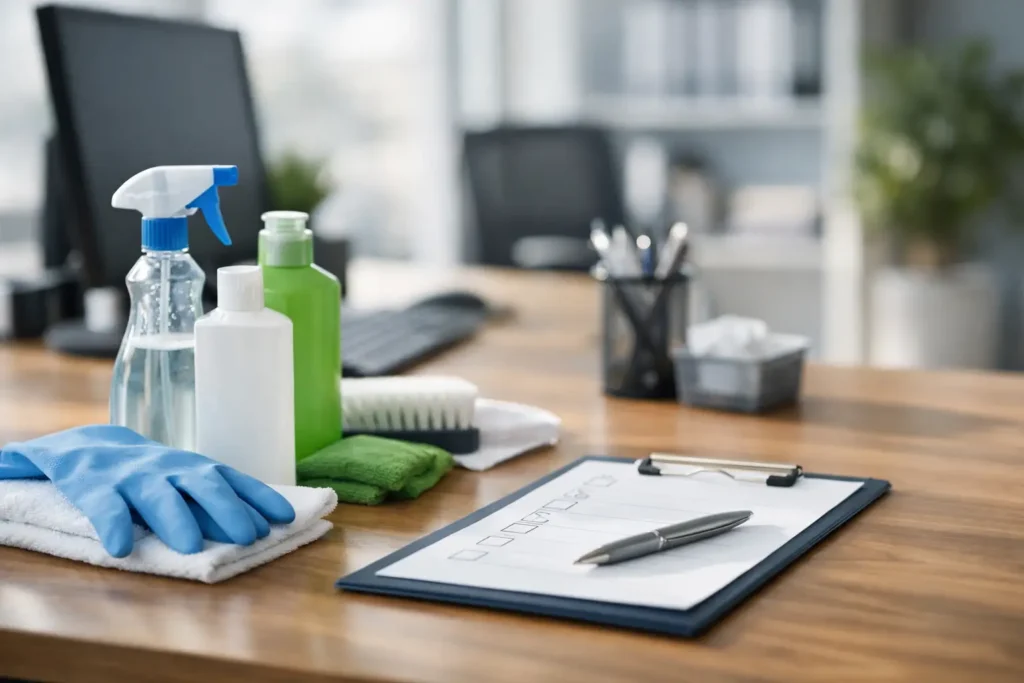
Walk into an office first thing Monday morning and you can usually tell how the week is going to feel. Smudged glass, overflowing trash, dusty desks, and sticky breakroom counters send one message. A clean, orderly space sends another. That is why having an office cleaning checklist example matters – not as paperwork for its own sake, but as a simple way to keep standards clear and workspaces consistently presentable.
For business owners, office managers, and property teams, the real challenge is not knowing that cleaning matters. It is making sure the right tasks get done at the right time without gaps, guesswork, or finger-pointing. A good checklist turns cleaning into a repeatable system. It protects your professional image, supports employee health, and makes it easier to spot when you need extra help.
What a good office cleaning checklist example should include
The best checklist is specific enough to be useful and flexible enough to match your space. A small professional office with ten employees will not need the same routine as a busy medical-adjacent suite, a shared workspace, or a high-traffic sales office with daily visitors.
Still, most offices need the same core categories covered. Common areas, restrooms, workstations, floors, touchpoints, and trash should all be accounted for. If a checklist skips these basics, it usually fails in practice. If it includes too much detail for a small space, staff may stop using it altogether.
That balance matters. A checklist should be easy to follow during a busy workday, not so long that it becomes background noise.
Office cleaning checklist example by frequency
A practical office cleaning routine works best when tasks are grouped by how often they actually need attention. Some areas need daily care. Others can be handled weekly or monthly without affecting cleanliness or appearance.
Daily office cleaning tasks
Daily cleaning keeps the office looking professional and helps prevent grime from building up. These are the items most businesses should address every day:
- Empty trash and replace liners
- Wipe and sanitize reception counters and shared surfaces
- Clean and disinfect door handles, light switches, and other high-touch points
- Wipe breakroom counters, tables, appliance handles, and sink areas
- Clean and disinfect restroom toilets, sinks, faucets, mirrors, and touchpoints
- Restock restroom supplies such as soap, toilet paper, and paper towels
- Spot clean glass entry doors and interior glass as needed
- Vacuum carpeted traffic areas and entry mats
- Sweep and mop hard floors
- Tidy common areas and meeting rooms
For many offices, these are the non-negotiables. If daily cleaning slips, clients notice quickly and employees do too.
Weekly office cleaning tasks
Weekly tasks go a little deeper. They address the dust, buildup, and overlooked surfaces that daily cleaning may not fully cover.
- Dust desks, windowsills, shelves, baseboards, and other horizontal surfaces
- Vacuum under furniture where accessible
- Mop hard floors more thoroughly, including corners and edges
- Clean interior glass and partitions more completely
- Sanitize phones, shared keyboards, and office equipment surfaces
- Wipe down chairs, file cabinets, and table legs
- Clean microwave interiors and polish breakroom appliances
- Disinfect conference tables and shared workstations in detail
This is also a good time to review any trouble spots. If one restroom, one breakroom, or one lobby area always looks worse than the rest, the schedule may need adjusting rather than stricter reminders.
Monthly and periodic office cleaning tasks
Monthly cleaning helps preserve the space and keeps small issues from becoming expensive ones.
- Dust vents, returns, and high ledges
- Clean behind and beneath larger furniture when possible
- Deep clean carpets or schedule professional carpet care as needed
- Machine scrub hard floors or apply floor treatments where appropriate
- Wash walls for spots and fingerprints
- Clean blinds and window frames
- Dust light fixtures and ceiling corners
- Sanitize trash cans inside and out
- Review supply storage and cleaning product inventory
Some offices may need these services more often. In high-traffic spaces, monthly can become biweekly. In quieter professional offices, some items can move to a quarterly schedule.
A simple room-by-room checklist works even better
If your team struggles with broad task lists, break the checklist down by area. That usually improves consistency because people can see exactly what belongs in each space.
Reception and lobby
Your front area shapes first impressions. Daily attention here should include straightening furniture, wiping tables, cleaning entry glass, vacuuming or mopping floors, and emptying trash. If clients visit often, fingerprints on doors and smudges on glass may need touch-ups more than once a day.
Workstations and offices
Private desks can be tricky because some businesses prefer employees to manage their own personal items. A smart checklist separates tidying from sanitizing. Cleaners can dust exposed surfaces, empty trash, vacuum floors, and disinfect shared touchpoints without disturbing paperwork.
That division helps avoid confusion. It also keeps accountability clear between staff responsibilities and professional cleaning tasks.
Breakroom and kitchen area
This area often causes the most frustration in an office because it gets used hard and cleaned inconsistently. Counters, sinks, appliance handles, tables, and cabinet fronts need regular sanitizing. Floors also matter here because crumbs, spills, and grease build up faster than in most other parts of the office.
If your team eats in the office every day, the breakroom may need more than one cleaning pass. That is not overdoing it. It is matching the routine to actual traffic.
Restrooms
Restrooms need a strict, repeatable standard. Toilets, urinals, sinks, mirrors, dispensers, partitions, and floors should be cleaned and disinfected thoroughly. Supplies should be checked every visit, not only once a day.
A restroom can look acceptable at a glance and still fall short on sanitation. That is one reason checklists matter so much here.
Why some office cleaning checklists fail
Most failed checklists have one of three problems. They are too vague, too ambitious, or disconnected from the actual office.
A vague checklist says things like clean surfaces or tidy restroom. That leaves too much room for interpretation. A better version says disinfect sink, faucet, toilet, partition handles, and door handle. Clear language creates better results.
An overly ambitious checklist causes a different problem. If a small office tries to maintain the same routine as a large, high-traffic building without enough time or staff, corners will be cut. It is better to have a realistic checklist completed consistently than a perfect one ignored by week two.
The third issue is fit. Offices in Reno and Sparks deal with dust, seasonal weather, and tracked-in debris that can change cleaning needs fast. Entryways, hard floors, and vents may need more frequent attention than a generic checklist from another market would suggest.
Should cleaning be handled in-house or outsourced?
It depends on your office size, hours, and expectations. A very small office may be able to manage daily tidying internally while bringing in professionals for deeper recurring service. A larger office usually benefits from outsourcing because consistency becomes harder to maintain when cleaning is added onto employee duties.
That trade-off is worth thinking through honestly. Asking staff to clean may save money on paper, but it often leads to uneven standards, missed tasks, and frustration. Professional cleaners follow systems, bring the right supplies, and know how to clean efficiently without disrupting the workday.
For businesses that want a spotless clean every time, a checklist is still useful even when service is outsourced. It helps define expectations, confirm priorities, and keep everyone aligned.
How to make your office cleaning checklist example work in real life
Start with your actual space, not a generic template. Count the restrooms, identify shared areas, note flooring types, and think about traffic levels. Then assign each task a realistic frequency.
Keep the checklist visible and simple. If multiple people are responsible, define who handles what. If you use a cleaning company, review the checklist together so there is no confusion about scope.
It also helps to revisit the checklist every few months. Businesses change. Staff grows. Layouts shift. Seasonal conditions affect entryways and floors. The best cleaning system is one that can adjust without losing consistency.
A dependable checklist does more than keep an office neat. It protects the experience people have when they walk through your doors every day. If your workplace needs a more reliable routine, professional support can take the pressure off your team and keep standards where they should be. Cleaning Bee helps Northern Nevada businesses stay clean, professional, and ready for the day ahead.